A sampan journey in the Tam Cốc - Bích Động landscape
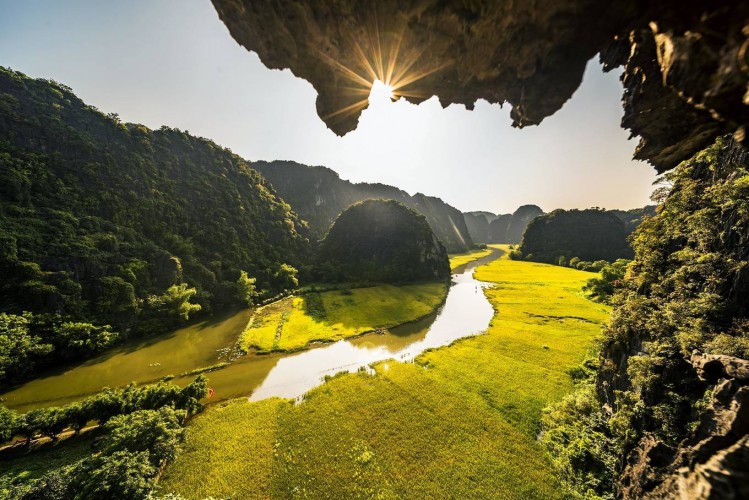
Tam Coc – Bich Dong is a harmonious architectural ensemble, a scenic spot which is considered as “a terrestrial Halong Bay” thanks to endlessly stretching mountain views, stunning caves, and charming waterways
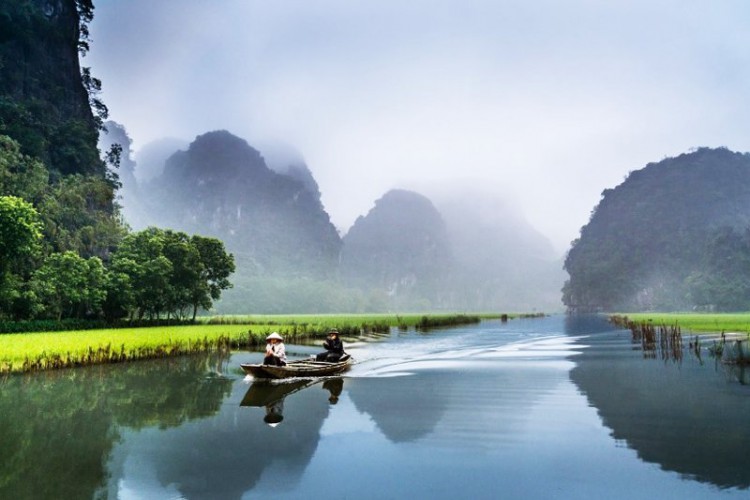
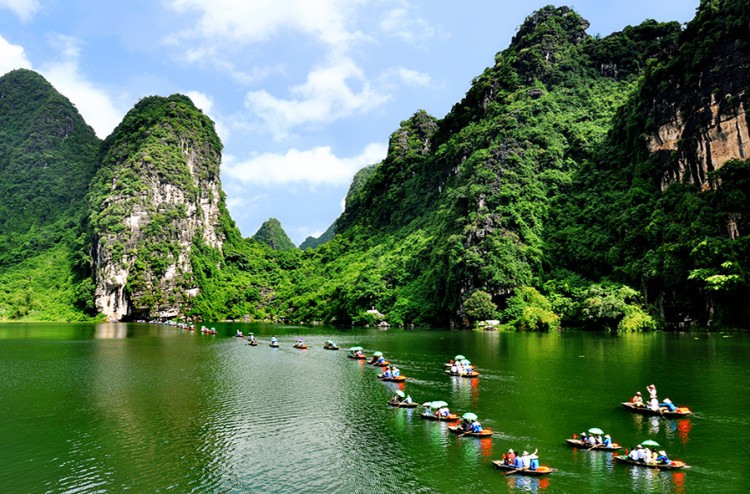
Located about 100 km south of Hanoi, 9 km West of Ninh Binh city, Tam Coc is known by the name "Ha long Bay on land or on rice field " and Tam Coc – Bich Dong landscape is one of the must-see destinations of Ninh Binh. There are many choices to enjoy the tranquil of the Ngo Dong river, mountains and caves, but a sampan excursion is the best one.
The sampans on Ngo Dong River
Tam Coc literally means three caves in the Sino-Vietnamese language, including: Hang Ca, Hang Hai and Hang Ba, they are formed by erosion of the Ngo Dong river on the rocks, this is the reason why the caves have no ground, only its own river runs through the interior of the caves.
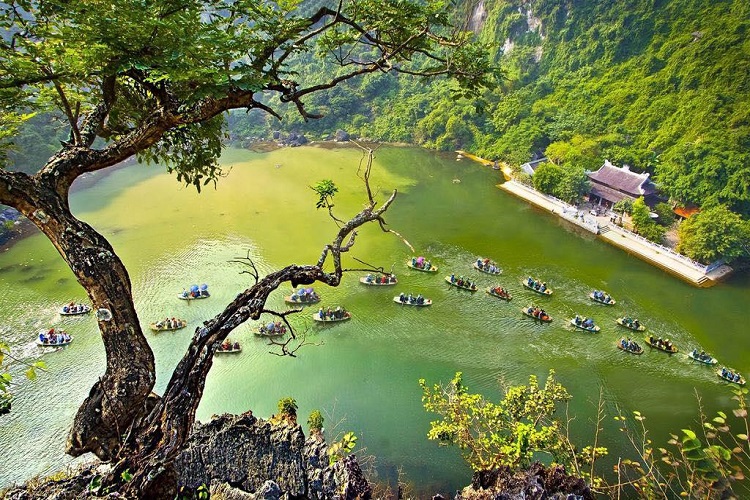
Firstly, we leave the Dinh Cac wharf on a sampan rowed by a local (mostly women). Now, let’s lay your eyes on the long array of imposing karst mountains, beautiful rice fields along both sides of the river, discovery fishes and plants under the crystal water or watching flying birds in the sky. Check your camera or your smart phone ready and be sure to take extra batteries along to shoot scenic photos here in such statuesque scenery.
Then, we visit the Hang Ca (First Cave) with 127m in length and over 20m in width. You will be amazed by the beauty of the stalactites hanging down magically in various shapes. About 1 km away from the Hang Ca, we go the next cave - Hang Hai (Second Cave) which is 60m in length and also full of beautiful stalactites. The last is the Hang Ba (Third Cave) nearby Hang Hai with 50m length and the lowest celling compare with two caves before. It takes about 2 – 3 hours to to travel through these caves.
Bich Dong Pagoda
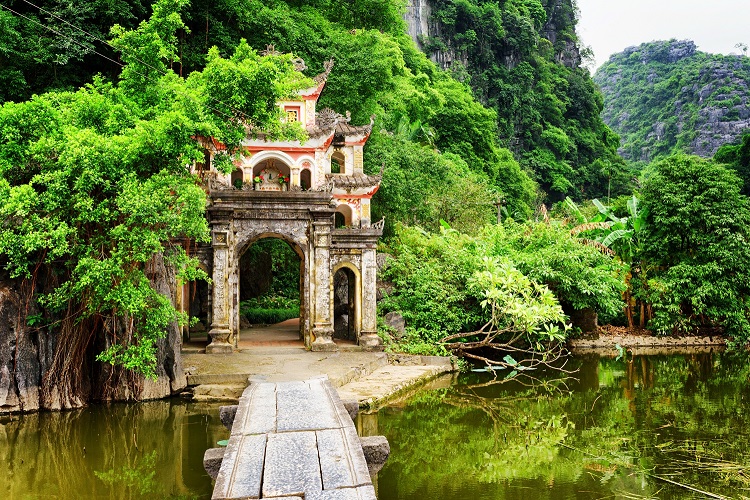
The next visiting point is Bich Dong pagoda, located about 2 km from Tam Coc that consists of 3 separate architectures: Ha Pagoda (lower pagoda), Trung Pagoda (Middle pagoda), and Thuong Pagoda (upper pagoda) and a cave.
The pagoda was first built in 1428, entranced by the view of the river and mountains, then restored in 1705. In 1774, Lord Trinh Sam visited this pagoda, admired the panoramic over the green patchwork of mountains, forest, caves, river and fields so he named the complex of pagodas and cave as Bich Dong means the Green Pearl.
The Lower pagoda was built with typical characteristics of Vietnamese architecture included: rafters, crossbars, beams. All made of ironwood (gỗ lim) - a kind of precious wood that is very hard, strong, heavy, durable, not termite; the two-tiered and curved roofs; the pillars in monolithic stone, high over 4m, etc.
Middle Pagoda
Dark Cave
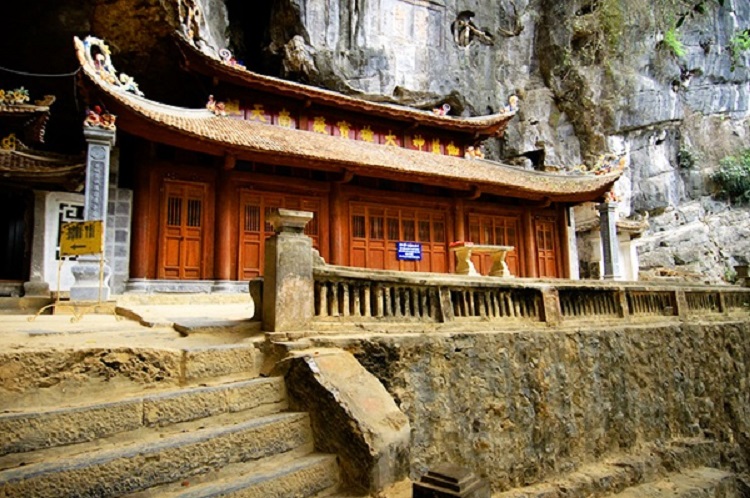
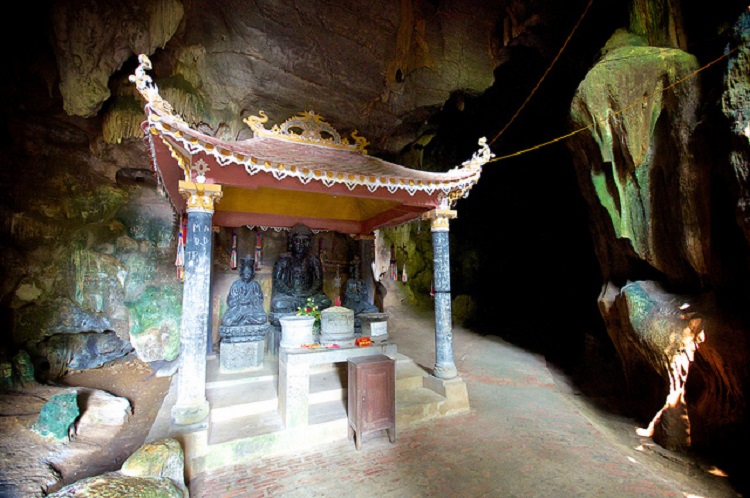
Keep going about 120 steps, it is Middle Pagoda, a unique pagoda with half exposed and half attached to the cave. We contemplate this ancient architecture, after that, we will visit the Dark Cave where we can find the ancient bell was cast in 1707 and many stalactites of various shapes.
Then, we climb about 40 more steps to reach the Upper Pagoda in the highest position, the place of worship of The Avalokitesvara Bodhisattva (Quan The Am Bo Tat); the two sides of the pagoda are the two temples worshiping the Earth God on the right and the Mountain God on the left.
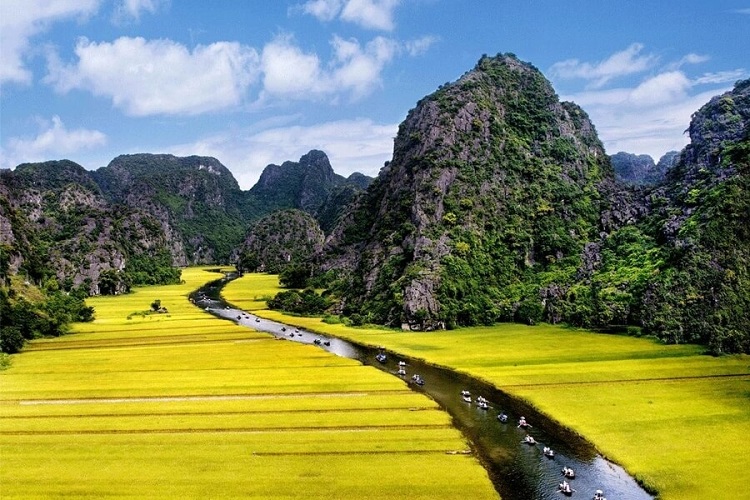
Tam Coc is very beautiful in February when the both sides of the river are covered by the young rice plants transplanted. But, the best time to travel Tam Coc is from late April to June because the rice fields grown along the river bank turn into yellow.
Yellow rice fields in Tam Coc from late April to June
For more information, please contact us immediately and follow us on Facebook.
Each trip prepared by us is a local immersion, deep in our heart, we want to share you and discover a real Vietnam and make you really live moments filled with emotion to make you feel Vietnam.
I want to show the world's travelers all the magnificence of its northern mountainous regions, the splendor of its bay of Ha Long, the noble beauty of the imperial city, and the sweetness of the banks of the Mekong River with its dotted delta floating villages.
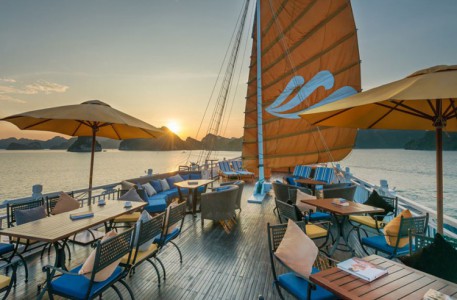
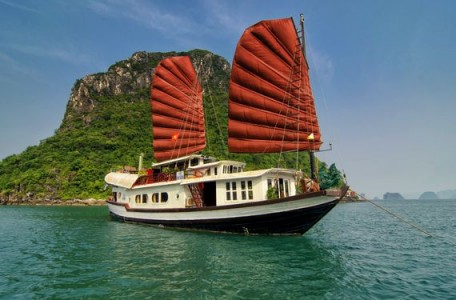
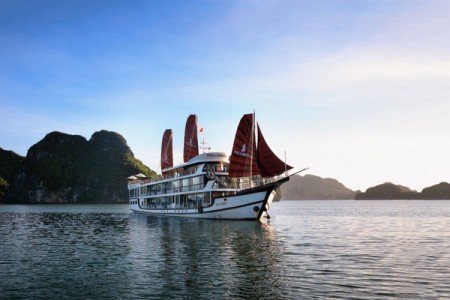
A traditional wooden junk designed for a personalised experience, the Paradise Luxury is the perfect blend of chic, modern styling and traditional Vietnamese detailing.
Find your unique personality by exploring the off the beaten track journey to discover the magnificence of Halong Bay and Bai Tu Long Bay - one of the 7 natural wonders of the world.<br />Indochina...
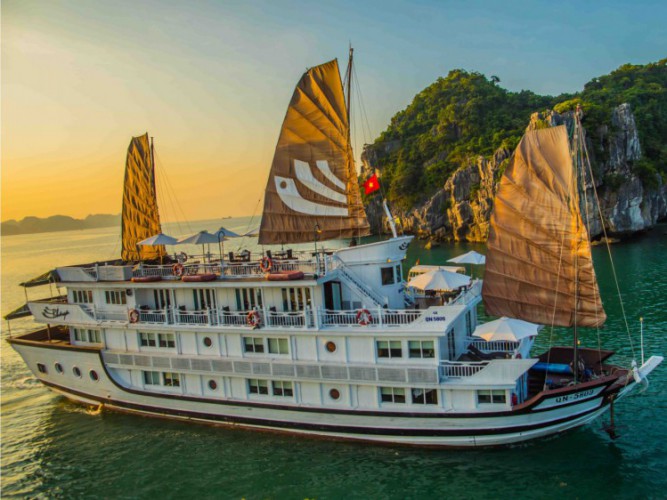
Bhaya is the boutique cruise line designed with a traditional look that offers authentic cruise experiences which combine the bay’s magnificent scenery with a taste of Vietnam’s rich traditional...
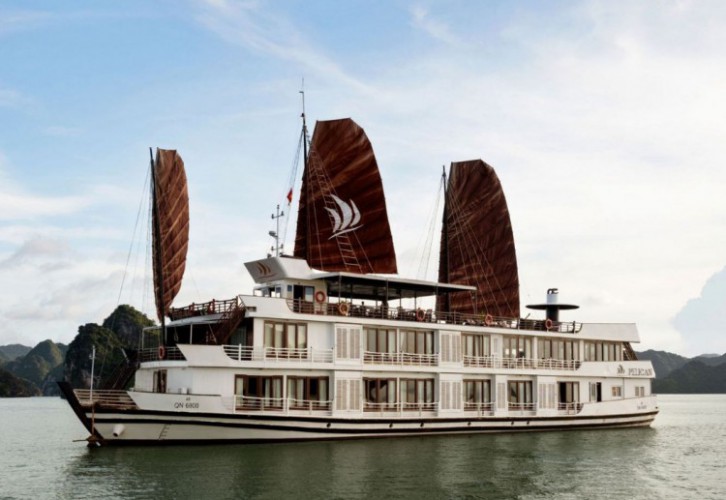
With luxury criteria, the Pelican fleet has 3 identical Pelican boats. Each boat has 22 cabins including bars, restaurants and a sun-deck that will offer you unique experiences at the 5-star level.
Perla Dawn Sails offers an off-the-beaten path cruise to Lan Ha Bay, the southern part of Halong Bay, where the scenic landscapes do not differ from those of Halong Bay.

















Each trip prepared by us is a local immersion, deep in our heart, we want to share you and discover a real Vietnam and make you really live moments filled with emotion to make you feel Vietnam.